
Pets are remarkably good at hiding pain. In the wild, showing signs of weakness can make an animal more vulnerable, and that instinct often remains even in our beloved companions. As a result, many dogs and cats continue eating, playing, and interacting with their families despite experiencing significant oral discomfort.
Because dental pain isn’t always obvious, many pet owners don’t realize there’s a problem until the condition has become more advanced. Learning to recognize the subtle signs of oral pain can help you seek veterinary care sooner, improving your pet’s comfort and supporting better long-term oral health.
Why Pets Often Hide Dental Pain
Unlike people, dogs and cats can’t tell us when something hurts. Instead of crying out or refusing to eat altogether, they often adapt to discomfort over time.
For example, a pet with a painful tooth may begin chewing on only one side of the mouth or swallow food without chewing thoroughly. Others may continue eating despite significant oral disease simply because their instinct to eat outweighs their discomfort.
This is why changes in your pet’s behavior, even small ones—should never be ignored.
Common Signs of Dental Pain in Dogs and Cats
Every pet experiences pain differently, but several signs may indicate an underlying dental or oral health problem.
Watch for symptoms such as:
- Bad breath that doesn’t improve
- Difficulty chewing or dropping food while eating
- Preferring soft food over dry kibble
- Pawing at the mouth or rubbing the face
- Excessive drooling
- Bleeding from the mouth or gums
- Facial swelling
- Loose or fractured teeth
- Reluctance to play with chew toys
- Changes in appetite
- Irritability or withdrawal from normal activities
Some pets show only one subtle symptom, while others may develop several signs as oral disease progresses.
What Can Cause Dental Pain?
Dental pain can result from a variety of oral health conditions, and not all are visible during a routine look inside your pet’s mouth.
Some of the more common causes include:
- Periodontal disease
- Fractured or worn teeth
- Tooth root infections
- Tooth resorption in cats
- Oral masses
- Injuries to the teeth or jaws
- Developmental abnormalities affecting the teeth or jaws
Because many dental conditions occur below the gumline, advanced imaging and a comprehensive oral examination are often needed to determine the exact cause of your pet’s discomfort.
Why an Accurate Diagnosis Matters
Not every pet showing signs of dental pain has the same condition, which is why a thorough evaluation is so important.
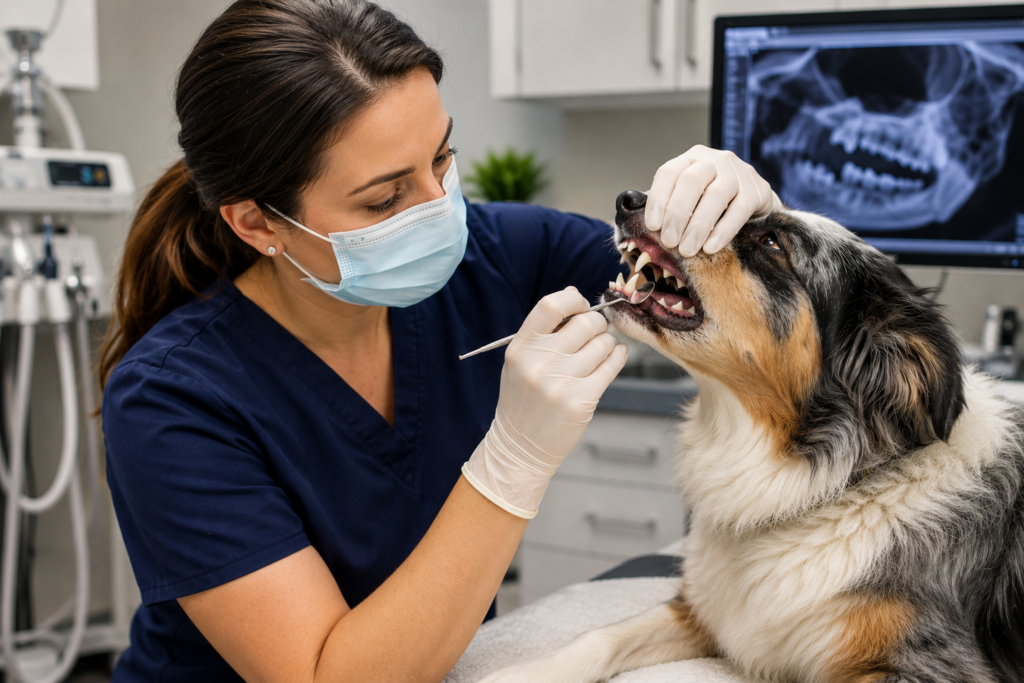
A board-certified veterinary dentist uses specialized training along with advanced diagnostic tools, such as dental radiographs and Cone Beam CT (CBCT) imaging when appropriate, to evaluate structures that cannot be seen during a visual examination alone. These diagnostic findings help identify the underlying cause of pain and guide an individualized treatment plan based on your pet’s specific needs.
Rather than treating only the symptoms, the goal is to diagnose the source of discomfort and recommend the most appropriate course of care.
What Treatments May Be Recommended?
Treatment depends entirely on your pet’s diagnosis, overall health, and the severity of the condition.
Depending on the findings, recommendations may include professional dental cleaning, periodontal treatment, tooth extraction, root canal therapy, oral surgery, or other advanced procedures designed to restore oral function and improve comfort.
Your veterinary dental specialist will discuss all appropriate treatment options, explain the expected benefits and considerations of each approach, and develop a personalized plan based on your pet’s individual condition.
When Should You Schedule an Evaluation?
If your dog or cat is showing any signs of dental pain, don’t assume the problem will resolve on its own. Even mild symptoms can indicate an underlying condition that may worsen over time without appropriate treatment.
An evaluation by a board-certified veterinary dental specialist can help identify the source of your pet’s discomfort and determine the most appropriate next steps. Early diagnosis may allow oral health problems to be addressed before they become more extensive.
If you think your pet may be experiencing dental pain, contact Veterinary Dentistry and Oral Surgery of Rhode Island to schedule a comprehensive oral examination. Our team is committed to providing compassionate, specialty-focused care that supports your pet’s comfort, oral health, and overall quality of life.
Frequently Asked Questions
Can pets have dental pain even if they’re still eating?
Yes. Dogs and cats often continue eating despite significant oral discomfort because they instinctively hide pain. Some pets may simply chew on one side of the mouth, swallow food without chewing thoroughly, or avoid hard treats while still maintaining a normal appetite.
What are the most common signs of dental pain in dogs and cats?
Signs of dental pain can include bad breath, difficulty chewing, dropping food, excessive drooling, pawing at the mouth, bleeding gums, facial swelling, loose or fractured teeth, and changes in appetite or behavior. Some pets show only subtle symptoms, making regular oral examinations especially important.
What causes dental pain in pets?
Dental pain may result from a variety of conditions, including periodontal disease, fractured teeth, tooth root infections, tooth resorption in cats, oral masses, traumatic injuries, or abnormalities affecting the teeth and jaws. A comprehensive examination is needed to determine the underlying cause.
Why might my veterinarian recommend advanced imaging?
Many dental problems occur below the gumline and cannot be identified during a visual examination alone. Dental radiographs and Cone Beam CT (CBCT) imaging provide detailed information about the teeth, surrounding bone, and other oral structures, allowing a veterinary dental specialist to make a more accurate diagnosis and develop an individualized treatment plan.
When should I schedule an evaluation with a veterinary dental specialist?
If your dog or cat is showing signs of oral discomfort, persistent bad breath, difficulty eating, facial swelling, or any other changes involving the mouth, it’s a good idea to schedule an evaluation. Early diagnosis can help identify the cause of your pet’s discomfort and determine the most appropriate treatment based on their individual condition.